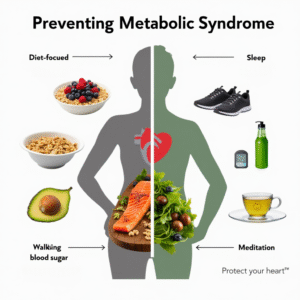
In the last article, we introduced insulin resistance as the central defect in type 2 diabetes — the reason blood sugar rises in the first place. But insulin resistance doesn’t start on the day someone is diagnosed. It builds silently, often for a decade or more, long before a blood test catches it. The encouraging side of that story is that if insulin resistance can develop through everyday choices, it can also be undone through everyday choices — sometimes remarkably quickly.
In landmark trials like the UK-based DiRECT study, nearly half of people with type 2 diabetes achieved full remission within a year through structured weight loss, and over a third remained in remission at two years (Lean et al., 2018, 2019). The primary mechanism driving that reversal is the restoration of insulin sensitivity. In other words, insulin resistance is not a one-way street.
This article explains what insulin resistance actually is at the tissue level, how to recognize the signs, and — most importantly — the specific dietary strategies with the best evidence for reversing it.
What Insulin Resistance Actually Is
In a healthy body, insulin works like a key. When you eat, your pancreas releases insulin into the bloodstream. That insulin binds to receptors on muscle and fat cells, which triggers a cascade that sends glucose transporters (called GLUT4) to the cell surface to pull glucose out of the blood (Gropper et al., 2018). It’s fast, efficient, and keeps blood sugar within a narrow range between meals and after eating.
In insulin resistance, the key still fits — but the lock has grown stiff. Muscle cells no longer respond strongly to insulin, so glucose uptake slows. Fat cells stop listening to insulin’s signal to hold onto stored fat, so free fatty acids leak into the bloodstream (Gropper et al., 2018). The pancreas compensates by secreting more insulin, pushing blood glucose back toward normal at the cost of chronically elevated insulin levels — a state called hyperinsulinemia.
For a while, this workaround succeeds. Blood sugar stays normal; only insulin rises. But it sets the stage for everything that follows. Over years, the pancreas’s insulin-producing beta cells wear out, blood glucose creeps upward, and what began as insulin resistance becomes type 2 diabetes.
The “Fat in the Wrong Places” Story
Why do cells become insulin resistant in the first place? Much of the recent research converges on one idea: ectopic fat— fat that has accumulated in places it shouldn’t be, particularly the liver, pancreas, and muscle (Gropper et al., 2018).
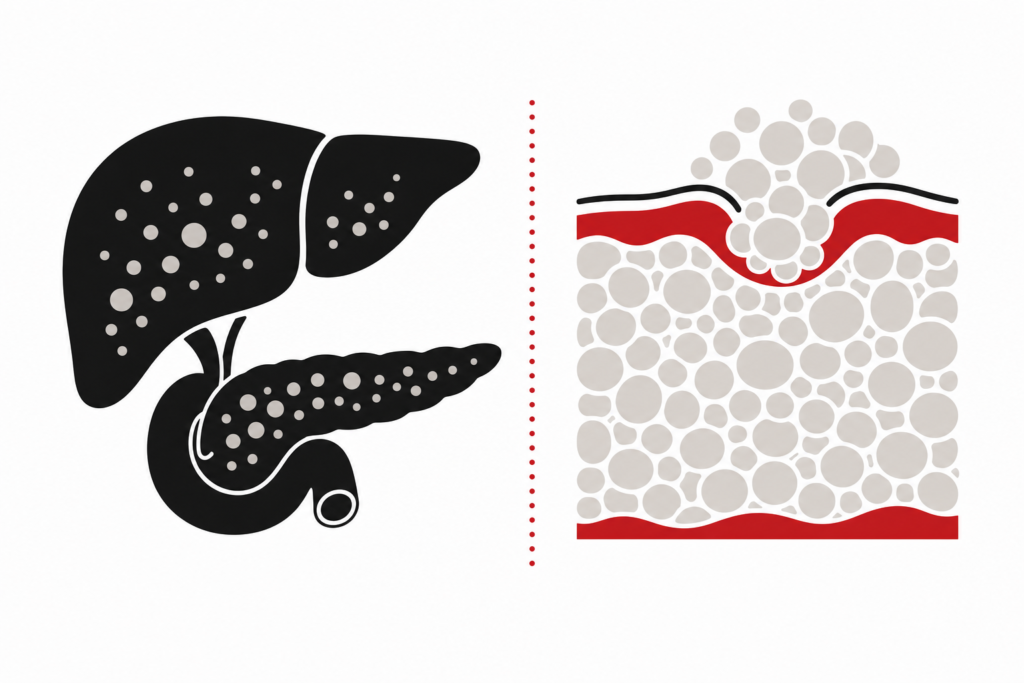
When subcutaneous fat stores (the fat you can pinch) become saturated, excess energy spills over into organs that weren’t designed to store fat. Fatty liver and fatty pancreas interfere with insulin signaling directly. This is why central (abdominal) obesity — a large waist circumference — is a far stronger predictor of insulin resistance than overall body weight. It’s also why relatively modest weight loss can produce dramatic metabolic improvements: the first pounds lost often come from the liver and pancreas, where they do the most damage.
The “twin cycle” model developed by researchers behind the DiRECT trial describes this clearly: excess liver fat drives insulin resistance and pushes more fat to the pancreas, where it impairs insulin secretion (Lean et al., 2018). Reverse the ectopic fat, and both problems can improve.
How You Know If You Have It

Insulin resistance is common. Among U.S. adults, the cluster of abnormalities called metabolic syndrome — which reflects underlying insulin resistance — affects roughly one in three (Gropper et al., 2018). Yet most people with insulin resistance have no idea, because routine blood sugar tests can look normal for years while insulin levels quietly climb.
No single test cleanly diagnoses insulin resistance. Clinicians instead look at patterns of markers that together tell a story (Gropper et al., 2018):
- Fasting insulin, when measured, is often elevated before fasting glucose ever rises. Levels above roughly 10 µIU/mL raise suspicion.
- Triglyceride-to-HDL ratio: a ratio above 3.0 (in mg/dL) correlates strongly with insulin resistance. This one is easy to calculate from a standard lipid panel.
- Waist circumference: above 40 inches in men or 35 inches in women signals the kind of central adiposity that typically accompanies insulin resistance.
- Fasting blood glucose in the high-normal range (roughly 95–125 mg/dL) is often the first sign visible on routine labs.
- HbA1c in the 5.7–6.4% range, the official prediabetes band, indicates that insulin resistance has progressed far enough to affect blood sugar control (American Diabetes Association [ADA], 2025).
There are also practical clues: persistent fatigue after high-carbohydrate meals, difficulty losing weight despite effort, skin tags, darkened patches of skin on the neck or armpits (a condition called acanthosis nigricans), and in women, polycystic ovarian syndrome — all often travel with insulin resistance.
If any of these apply, ask your physician about a fasting insulin and lipid panel at your next visit. You don’t need a diabetes diagnosis to start addressing the underlying problem.
The Dietary Pillars for Restoring Insulin Sensitivity
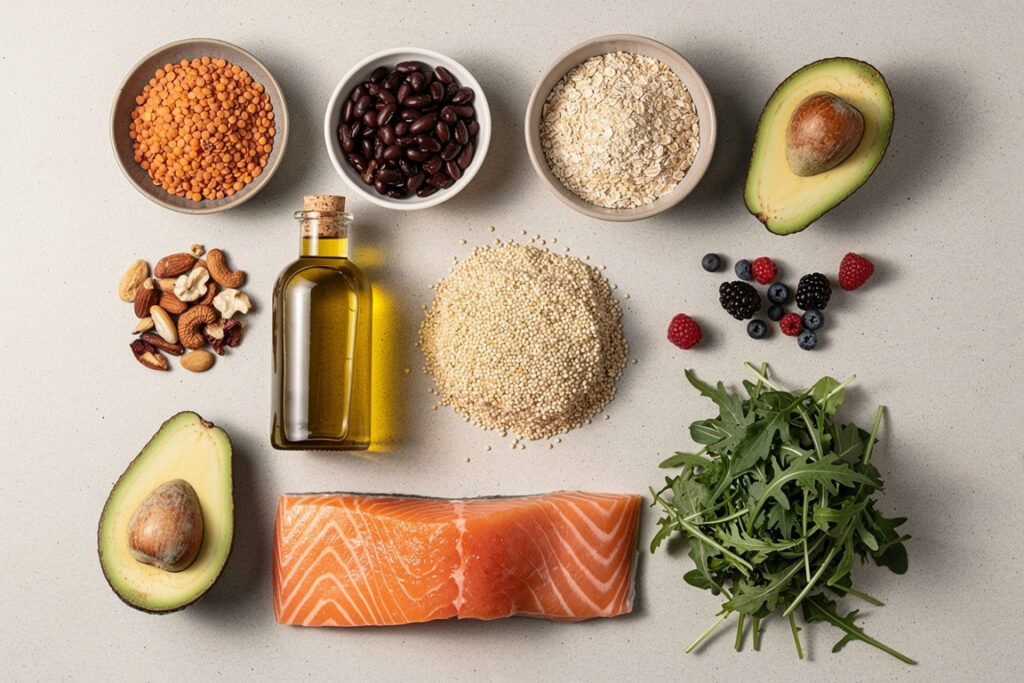
The research on reversing insulin resistance converges on a few consistent principles. None is a quick fix; together, they form the foundation of nearly every evidence-based approach to diabetes prevention and remission.
Pillar 1: Reduce Excess Body Fat (Especially Around the Middle)
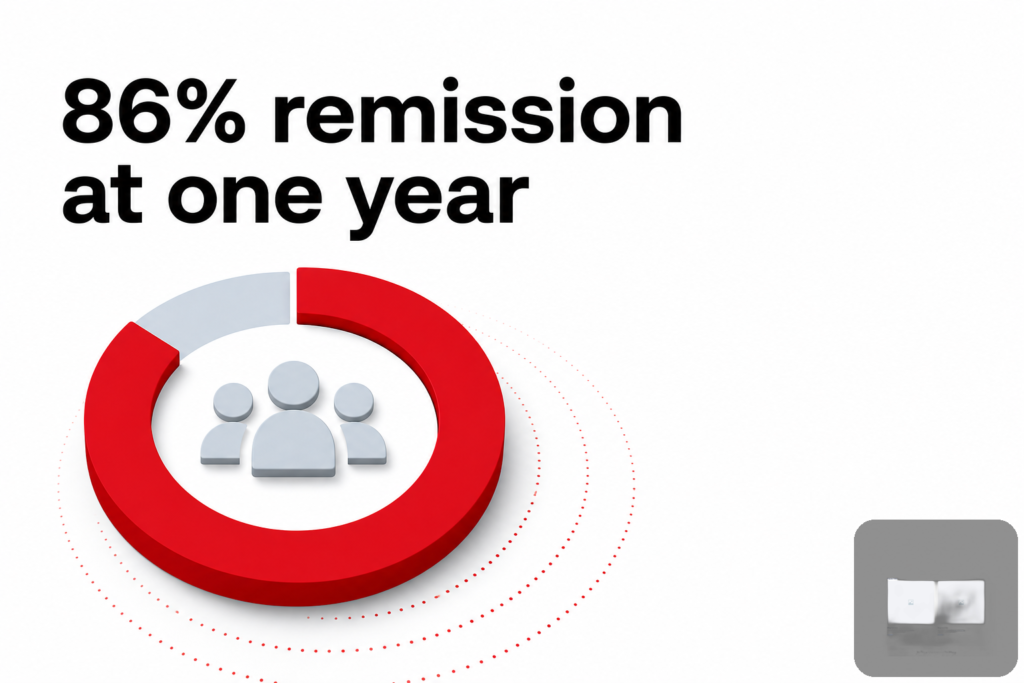
This is the single most powerful lever. Considerable evidence demonstrates that when a person loses weight, insulin sensitivity improves — often substantially (Gropper et al., 2018). The DiRECT trial made this vivid: among participants who lost 15 kg (33 lbs) or more through a structured weight-management program, 86% achieved full remission of type 2 diabetes at one year (Lean et al., 2018). Even more encouraging, 70% of those who maintained that weight loss remained in remission at two years (Lean et al., 2019), and a meaningful proportion were still in remission five years later (Lean et al., 2024).
What matters is sustained energy balance, not any particular diet philosophy. Interestingly, when calorie intake is held constant, the specific macronutrient ratios — more carbs versus more fat — have relatively little effect on insulin sensitivity on their own (Gropper et al., 2018). What moves the needle is the amount of body fat, particularly visceral fat, that you carry.
For most people, a modest deficit of 500–750 calories per day, producing weight loss of 1–2 pounds weekly, is both effective and sustainable. Even a 5–7% reduction in body weight meaningfully improves insulin action.
Pillar 2: Upgrade Carbohydrate Quality
Here the macronutrient composition does matter. For someone with insulin resistance, a diet high in refined carbohydrates creates a particularly difficult situation: the additional carbohydrate requires more insulin to be secreted to maintain glucose homeostasis, pushing already-elevated insulin levels even higher (Gropper et al., 2018).
The fix isn’t necessarily low-carb. It’s high-quality carb. Intact whole grains, legumes, fruits, and non-starchy vegetables produce gentler glucose and insulin responses than refined flour, white rice, and sweets. Long-term consumption of high-glycemic-load diets is associated with increased risk of type 2 diabetes, while lower-glycemic-load patterns are associated with reduced risk (Greenwood et al., 2013).
Practical translation: if the carb came from a plant you’d recognize at a farm, you’re usually in good territory. If it came from a factory in a shiny wrapper, it probably isn’t helping.
Pillar 3: Hit Your Fiber Target
Dietary fiber is one of the most underrated tools for insulin sensitivity. Viscous, soluble fibers — found in oats, beans, lentils, barley, psyllium, berries, and vegetables — slow gastric emptying, blunt glucose absorption, and alter the release of gut hormones that regulate insulin (Gropper et al., 2018). Fermentation of fiber in the colon produces short-chain fatty acids that further improve glucose regulation.
Meaningful improvements in glycemic control typically appear at intakes of at least 30 grams of fiber daily, though 20 grams still provides benefit (Gropper et al., 2018). The average American consumes roughly 15 grams — less than half the target. Closing that gap, largely by adding beans, lentils, intact grains, fruit with the skin, and more vegetables, is one of the most reliably effective dietary changes for insulin sensitivity.
Pillar 4: Prioritize Unsaturated Fats
The 2025 Dietary Guidelines and the American Diabetes Association both recommend replacing saturated fat with unsaturated fats — particularly monounsaturated fats (olive oil, avocado, nuts) and polyunsaturated fats from fish and plant sources (ADA, 2025; Gropper et al., 2018). This shift, a hallmark of the Mediterranean pattern, improves both insulin sensitivity and the cardiovascular risk profile that typically accompanies insulin resistance.
Trans fats deserve a separate mention: they worsen insulin sensitivity and cardiovascular risk, and should be kept as close to zero as possible (Gropper et al., 2018).
Pillar 5: Get Enough Protein
Protein plays two roles in restoring insulin sensitivity. First, it preserves muscle mass during weight loss — critical because muscle is the body’s largest site of glucose disposal and the tissue most responsible for maintaining insulin sensitivity (Gropper et al., 2018). Losing weight without protecting muscle can leave someone lighter but not meaningfully healthier.
Second, protein produces a modest blunting of the blood glucose response when paired with carbohydrate, and it promotes satiety, which supports sustained energy balance.
For most adults aiming to improve insulin sensitivity, roughly 1.0–1.2 grams of protein per kilogram of body weight per day, spread across meals, supports both goals. Plant-forward sources — beans, lentils, tofu, fish, poultry, and dairy — are emphasized in current ADA guidance (ADA, 2025).
Meal Timing Matters
A growing body of research suggests that when you eat also influences insulin sensitivity, independently of what or how much you eat.
Time-restricted eating (TRE) — condensing all daily food intake into a window of roughly 8–10 hours — has shown promising effects in people with insulin resistance. In a landmark controlled feeding study, men with prediabetes who ate within a 6-hour early window (with dinner before 3 p.m.) showed improved insulin sensitivity, beta-cell responsiveness, blood pressure, and oxidative stress, even without any weight loss (Sutton et al., 2018). Subsequent systematic reviews have largely confirmed that time-restricted eating improves glycemic parameters in people with prediabetes and type 2 diabetes, with the best results typically seen when the eating window is earlier in the day (Che et al., 2022).
The mechanism appears tied to circadian biology: the body handles glucose better in the morning and early afternoon, when insulin sensitivity is naturally higher. Late-night eating, in contrast, forces the body to manage a glucose load when its metabolic machinery is winding down.
A gentler version of this principle — simply avoiding food for 2–3 hours before bed and allowing a 12–14 hour overnight fast — is likely enough to capture much of the benefit without complicated rules.
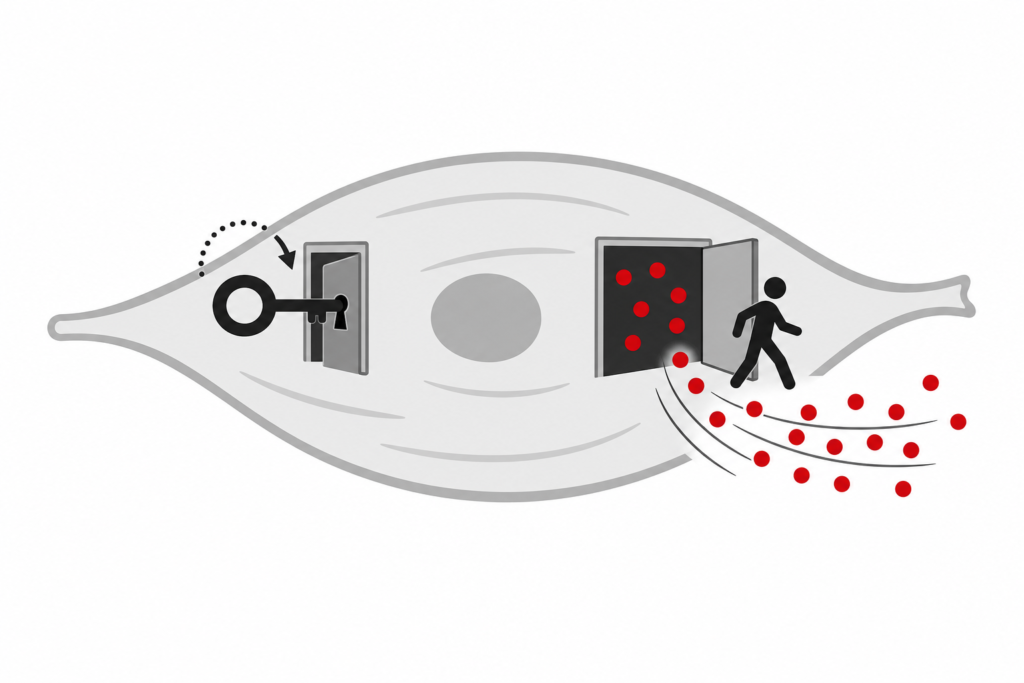
Post-meal movement is another timing tool worth knowing. A 10–15 minute walk after meals activates AMPK and causes GLUT4 to translocate to the muscle cell surface for glucose uptake — independent of insulin (Gropper et al., 2018). For anyone with insulin resistance, this is the equivalent of opening a second door into the cell; glucose gets cleared from the blood without demanding more insulin from an already-strained pancreas.
What the Best Dietary Patterns Have in Common
It is striking how much the evidence-based patterns — Mediterranean, DASH, vegetarian, and low-glycemic — agree with one another. All emphasize fruits, vegetables, whole grains, legumes, and nuts; all minimize sugar-sweetened beverages, refined grains, and processed meats (ADA, 2025; Gropper et al., 2018). All produce meaningful improvements in insulin sensitivity, A1c, and cardiovascular risk.
Rather than arguing about which is “best,” the more useful question is: which of these can I actually live on? The most effective diet for insulin resistance is the evidence-based pattern you can sustain for years, not the perfect one you abandon after six weeks.
Practical Takeaways
Shrink your waist, not just the number on the scale. Visceral fat drives insulin resistance more than overall weight. A tape measure around the belly button is a better progress tracker than any scale.
Aim for 30 grams of fiber daily. Build your plate around beans, lentils, intact whole grains, fruit, and vegetables. This single change often improves fasting glucose and insulin within weeks.
Replace refined carbs, not all carbs. A bowl of steel-cut oats with berries and nuts is a very different food experience from a blueberry muffin, even though both “contain carbs.” Focus on the quality upgrade.
Swap saturated fat for olive oil, nuts, avocado, and fatty fish. This one change captures much of the metabolic benefit of the Mediterranean diet.
Protect muscle with adequate protein (roughly 1.0–1.2 g/kg/day), distributed across meals. Muscle is the biggest destination for glucose in the body — preserve it.
Eat in a consistent window, and preferably earlier. A 10–12 hour daily eating window, with your last meal at least 2–3 hours before bed, aligns eating with your body’s natural insulin rhythm.
Walk after meals. Even 10–15 minutes of gentle movement dramatically improves post-meal glucose — without any insulin required.
Stop eating your calories in liquid form. Sugar-sweetened beverages, specialty coffees, and most fruit juices produce the largest and fastest insulin spikes in the typical diet. Water, unsweetened tea, and coffee are better defaults (ADA, 2025).
The Bottom Line
Insulin resistance is the engine that drives type 2 diabetes, but it is also one of the most reversible metabolic conditions we know. The mechanism itself tells us why: insulin resistance is not a fixed disease state — it is a dynamic adaptation to years of excess energy, low-quality carbohydrates, insufficient fiber, inadequate movement, and disrupted meal rhythms. Each of those inputs is under your control, and each change you make nudges the system back toward sensitivity.
The DiRECT trial and decades of converging research show that substantial improvements in insulin action are possible within weeks to months, and that full remission of type 2 diabetes — once thought impossible — can be a realistic goal for many people (Lean et al., 2018, 2019, 2024). The foundation is not exotic: eat mostly plants, prioritize fiber and protein, favor unsaturated fats, move your body regularly (especially after meals), give your digestive system an overnight break, and reduce excess body fat gradually and sustainably.
In the next article, we’ll zoom into one specific, often-overlooked piece of this picture: the glycemic index and glycemic load — how to actually use them at the grocery store, and where they help versus where they mislead.
References
American Diabetes Association Professional Practice Committee. (2025). Standards of care in diabetes—2025. Diabetes Care, 48(Suppl. 1), S1–S322. https://doi.org/10.2337/dc25-SINT
Che, T., Yan, C., Tian, D., Zhang, X., Liu, X., & Wu, Z. (2022). Time-restricted eating for patients with diabetes and prediabetes: A systematic review. Frontiers in Nutrition, 9, 1025919. https://doi.org/10.3389/fnut.2022.1025919
Greenwood, D. C., Threapleton, D. E., Evans, C. E. L., Cleghorn, C. L., Nykjaer, C., Woodhead, C., & Burley, V. J. (2013). Glycemic index, glycemic load, carbohydrates, and type 2 diabetes: Systematic review and dose–response meta-analysis of prospective studies. Diabetes Care, 36(12), 4166–4171. https://doi.org/10.2337/dc13-0325
Gropper, S. S., Smith, J. L., & Carr, T. P. (2018). Advanced nutrition and human metabolism (7th ed.). Cengage Learning.
Lean, M. E. J., Leslie, W. S., Barnes, A. C., Brosnahan, N., Thom, G., McCombie, L., Peters, C., Zhyzhneuskaya, S., Al-Mrabeh, A., Hollingsworth, K. G., Rodrigues, A. M., Rehackova, L., Adamson, A. J., Sniehotta, F. F., Mathers, J. C., Ross, H. M., McIlvenna, Y., Stefanetti, R., Trenell, M., … Taylor, R. (2018). Primary care-led weight management for remission of type 2 diabetes (DiRECT): An open-label, cluster-randomised trial. The Lancet, 391(10120), 541–551. https://doi.org/10.1016/S0140-6736(17)33102-1
Lean, M. E. J., Leslie, W. S., Barnes, A. C., Brosnahan, N., Thom, G., McCombie, L., Peters, C., Zhyzhneuskaya, S., Al-Mrabeh, A., Hollingsworth, K. G., Rodrigues, A. M., Rehackova, L., Adamson, A. J., Sniehotta, F. F., Mathers, J. C., Ross, H. M., McIlvenna, Y., Welsh, P., Kean, S., … Taylor, R. (2019). Durability of a primary care-led weight-management intervention for remission of type 2 diabetes: 2-year results of the DiRECT open-label, cluster-randomised trial. The Lancet Diabetes & Endocrinology, 7(5), 344–355. https://doi.org/10.1016/S2213-8587(19)30068-3
Lean, M. E. J., Leslie, W. S., Barnes, A. C., Brosnahan, N., Thom, G., McCombie, L., Kelly, T., Irvine, K., Peters, C., Zhyzhneuskaya, S., Hollingsworth, K. G., Adamson, A. J., Sniehotta, F. F., Mathers, J. C., McIlvenna, Y., Welsh, P., McConnachie, A., McIntosh, A., Sattar, N., & Taylor, R. (2024). 5-year follow-up of the randomised Diabetes Remission Clinical Trial (DiRECT) of continued support for weight loss maintenance in the UK: An extension study. The Lancet Diabetes & Endocrinology, 12(4), 233–246. https://doi.org/10.1016/S2213-8587(23)00385-6
Sutton, E. F., Beyl, R., Early, K. S., Cefalu, W. T., Ravussin, E., & Peterson, C. M. (2018). Early time-restricted feeding improves insulin sensitivity, blood pressure, and oxidative stress even without weight loss in men with prediabetes. Cell Metabolism, 27(6), 1212–1221.e3. https://doi.org/10.1016/j.cmet.2018.04.010