Type 2 diabetes has become one of the defining health challenges of our time. In the United States alone, more than 30 million adults are living with diabetes, and another 84 million have prediabetes—a condition that, without intervention, often progresses to full-blown disease. What makes this epidemic especially striking is that roughly 90 to 95 percent of all diagnosed diabetes cases are Type 2, a form of the disease deeply tied to diet, weight, and everyday lifestyle choices.
At the heart of Type 2 diabetes sits a single, essential molecule: glucose. Every cell in your body runs on it. Every bite of food you take—whether a slice of sourdough or a handful of jellybeans—eventually influences how much glucose is circulating in your blood. The problem isn’t glucose itself, but how the body manages it. And that is precisely where nutrition enters the picture—not as a peripheral concern, but as one of the most powerful levers available for prevention, management, and in many cases, meaningful improvement of the disease.
This article is the first in our series on diabetes and nutrition. Before we explore specific diets, meal plans, or strategies in future posts, it helps to understand the fundamental relationship between what you eat and what happens to your blood sugar. Once that connection clicks, the rest begins to make sense.
What Is Type 2 Diabetes, Really?
Diabetes mellitus is fundamentally a disorder of glucose homeostasis—a medical term for the body’s ability to keep blood sugar within a healthy range. To understand why diabetes develops, we first need to look at how the system is supposed to work.
How Insulin Normally Works
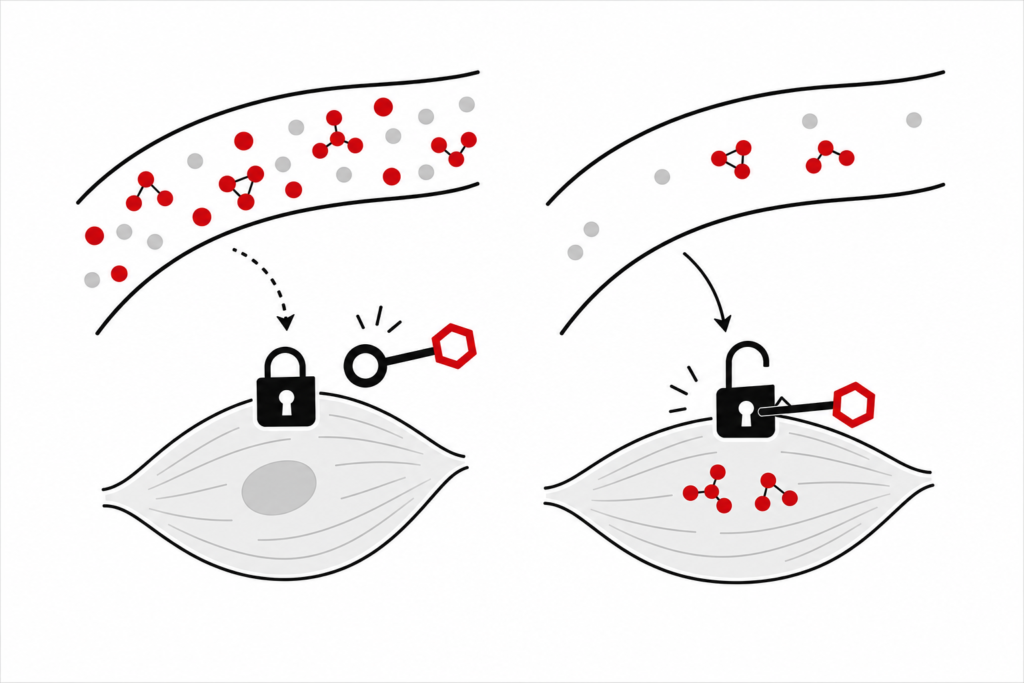
When you eat carbohydrates, your digestive system breaks them down into glucose, which enters your bloodstream. In response, your pancreas releases a hormone called insulin. Think of insulin as a key that unlocks your cells—particularly those in muscle and fat tissue—allowing glucose to move out of the blood and into the cells, where it can be used for energy or stored for later.
In a healthy person, fasting blood glucose stays in a relatively narrow range of roughly 80–100 mg/dL. After meals, it rises temporarily, insulin is released, glucose is shuttled into cells, and levels return to baseline. This elegant dance happens thousands of times over a lifetime without most of us noticing.
What Goes Wrong in Type 2 Diabetes
In Type 2 diabetes, this system breaks down. Cells in the muscle and adipose (fat) tissues stop responding properly to insulin—a condition known as insulin resistance. The key no longer turns easily in the lock. As glucose builds up in the bloodstream, the pancreas tries to compensate by producing even more insulin, pushing harder to get the message through. For years—sometimes decades—the pancreas keeps up. But eventually it begins to wear down. Blood sugar creeps upward, first into the prediabetic range, and eventually into diabetes.
This is what distinguishes Type 2 from Type 1 diabetes. In Type 1, the immune system destroys the insulin-producing cells of the pancreas, and insulin levels are very low or absent. In Type 2, insulin is often elevated—at least initially—because the body is still producing plenty; the cells simply aren’t listening.
The consequences of unaddressed high blood sugar are serious. Over time, elevated glucose damages blood vessels and nerves, triggering a cascade of complications: heart disease and stroke (people with diabetes are roughly twice as likely to develop either), vision loss from diabetic retinopathy, kidney disease that can progress to kidney failure, peripheral neuropathy, and in severe cases, amputation of toes, feet, or legs.
The Scale of the Problem
Diabetes is no longer a rare diagnosis reserved for older adults. It is now considered a 21st-century global emergency, affecting an estimated 415 million adults worldwide. In the United States, diabetes is the seventh leading cause of death. Nearly 34 percent of American adults have prediabetes—and most of them don’t know it.
The connection to weight is particularly striking: approximately 90 percent of people with Type 2 diabetes are overweight or obese, making excess body fat the single most important modifiable risk factor for the disease. Other well-established risk factors include a family history of diabetes, physical inactivity, certain high-risk ethnic backgrounds (African American, Latino, Native American, Asian American, and Pacific Islander populations), a personal history of gestational diabetes, hypertension, polycystic ovarian syndrome, and low HDL cholesterol or elevated triglycerides.
The encouraging news? Research shows that people with prediabetes who participate in structured lifestyle change programs can reduce their risk of developing Type 2 diabetes by as much as 58 percent. Nutrition sits at the center of that opportunity.
How Your Food Becomes Your Blood Sugar
The most important concept to grasp in diabetes nutrition is this: not all foods affect blood sugar in the same way.
All digestible carbohydrates—whether from fruit, bread, rice, or candy—eventually become glucose. But the speed and magnitude of the blood sugar rise vary enormously depending on the food, what it’s eaten with, and even how it’s prepared.
What Happens After a Meal
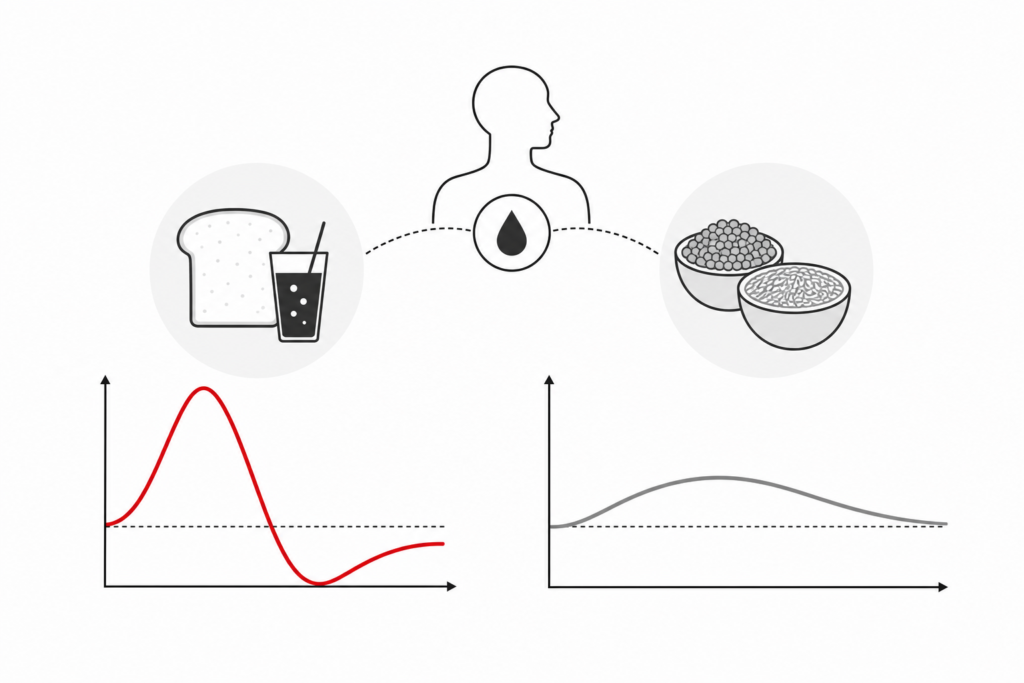
When you eat a fast-digesting food like white bread or a sugary drink, glucose enters your bloodstream quickly, causing a sharp spike in blood sugar. Your pancreas responds with a large surge of insulin. Because insulin is so effective, blood sugar can then fall rapidly—sometimes dropping below the baseline and leaving you hungry, shaky, or craving more carbs within an hour or two.
A slower-digesting food, like lentils or steel-cut oats, produces a more gradual and modest rise in blood sugar. Insulin is released in a steadier, lower dose. Blood sugar returns to baseline smoothly. You feel satisfied longer, and the metabolic demand on your pancreas is much gentler.
For someone with insulin resistance or Type 2 diabetes, repeated spikes place the pancreas under chronic stress and keep circulating insulin elevated—both of which worsen the underlying condition over time.
The Glycemic Index and Glycemic Load
Nutrition scientists use two related measures to quantify these differences:
The glycemic index (GI) ranks foods from 0 to 100 based on how much they raise blood glucose compared with pure glucose (set at 100). Low-GI foods produce a gentler rise; high-GI foods produce a sharper one.
The glycemic load (GL) multiplies a food’s GI by the typical serving size, giving a more realistic picture of how that food affects blood sugar during actual eating.
Using glucose as the reference:
- Low-GI foods include lentils (~28), kidney beans (~23), whole-wheat bread (~52), and apples (~40).
- Medium-GI foods include brown rice (~50), bananas (~51), and whole-grain pasta (~46).
- High-GI foods include cornflakes (~81), bagels (~72), instant mashed potatoes (~88), and raisin bran (~61).
Interestingly, the same food can have very different GI values depending on preparation. A boiled red potato eaten hot has a GI of about 89, but once cooled, the starch partially recrystallizes and the same potato drops to around 56. It’s a small example of how the details of cooking and timing can matter.
Dietary Patterns That Support Blood Sugar Control
Zooming out from individual foods to overall eating patterns, the evidence points consistently in one direction. Dietary patterns higher in fruits, vegetables, and whole grains—and lower in red and processed meats, high-fat dairy, refined grains, and sugar-sweetened beverages—are associated with a meaningfully reduced risk of developing Type 2 diabetes.
Fiber: The Unsung Hero
Fiber deserves particular attention because it affects blood sugar so directly. Viscous, gel-forming fibers (found in oats, beans, apples, psyllium, and barley) slow the rate at which glucose is absorbed from the intestines. The result is a lower, slower, more controlled blood sugar response after meals.
Research suggests that meaningful improvements in glycemic control typically appear with fiber intakes of at least 30 grams per day, though benefits may begin around 20 grams. Most Americans fall well below those targets, averaging closer to 15 grams. Simple substitutions—switching from white bread to whole-grain, adding beans or lentils to soups and salads, snacking on whole fruit instead of crackers—can meaningfully close that gap.
Fiber also supports satiety and weight management, which in turn improves insulin sensitivity. It’s one of the clearest examples of a single dietary component exerting multiple, overlapping benefits.
Foods to Emphasize
Based on the evidence, the foundational foods for blood sugar support include:
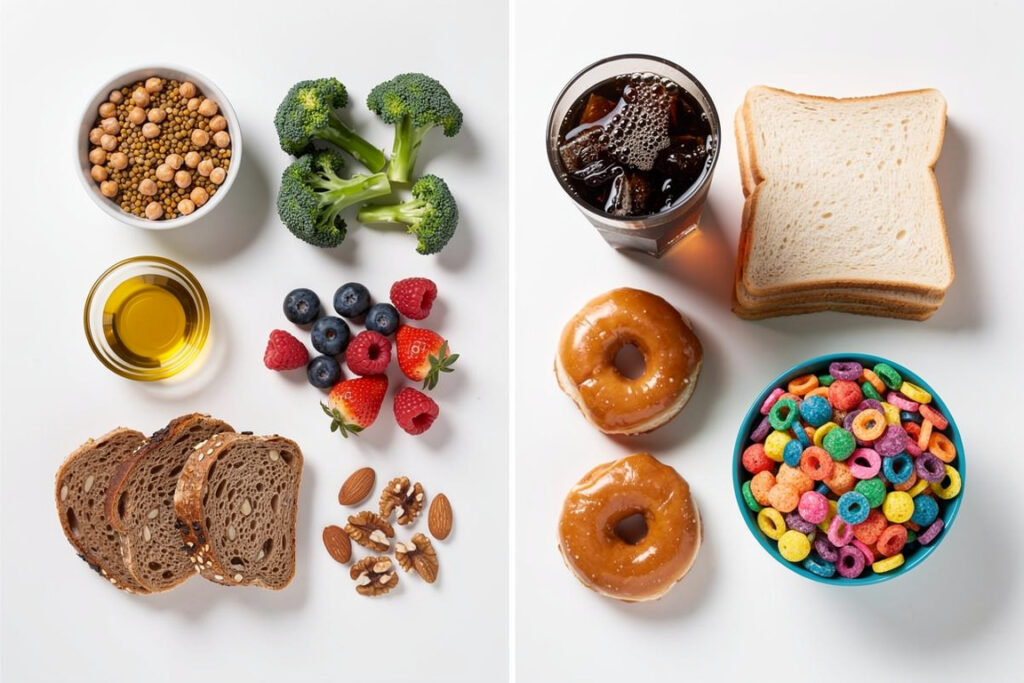
- Non-starchy vegetables (leafy greens, broccoli, peppers, cauliflower, zucchini) — low in GI, rich in fiber.
- Legumes (lentils, chickpeas, black beans, kidney beans) — among the lowest-GI carbohydrate sources available.
- Whole grains (steel-cut oats, quinoa, barley, whole-grain bread and pasta).
- Whole fruits (berries, apples, pears, citrus) — the fiber matrix makes them very different from juice.
- Lean proteins and healthy fats (fish, poultry, nuts, seeds, olive oil) — help moderate the glycemic response of mixed meals.
Foods to Limit
The other side of the equation matters just as much. Foods and beverages linked to higher diabetes risk and worse blood sugar control include sugar-sweetened beverages (soda, sweet tea, juice drinks), refined grains (white bread, white rice, most breakfast cereals), processed snack foods and pastries, processed and red meats in large quantities, and high-fat dairy as a dietary staple.
This doesn’t mean these foods must be eliminated entirely. It means they shouldn’t form the foundation of your everyday eating.
Weight, Body Composition, and Insulin Sensitivity
Because excess body fat is so strongly linked to insulin resistance, weight management is inseparable from diabetes nutrition. Even modest weight loss—just 5 to 10 percent of body weight—can substantially improve insulin sensitivity, lower fasting blood glucose, and in many cases reduce the need for medication.
A key insight from metabolic research is that when calories are held equal, the macronutrient composition of a weight-loss diet has relatively little effect on insulin sensitivity on its own. In other words, whether you lose weight through a Mediterranean-style approach, a lower-carbohydrate plan, or a plant-based diet, the weight loss itself is what most strongly drives the metabolic improvement. The best diet is, in large part, the one you can actually sustain.
One important caveat: very low-fat, very high-carbohydrate diets can backfire for people who are already insulin resistant, because the added carbohydrate load demands even more insulin from a pancreas that is already under strain. This is why balanced, whole-food patterns that moderate—rather than maximize—refined carbohydrates tend to work best for most people.
Beyond the Plate: The Lifestyle Connection
Nutrition is the cornerstone, but it is not the whole story. Physical activity independently improves insulin sensitivity, because exercising muscles can take up glucose with minimal insulin assistance. Even a 20- to 30-minute walk after a meal can meaningfully blunt the post-meal glucose rise.
Sleep quality, stress management, and avoidance of tobacco all play supporting roles. Chronic sleep deprivation and elevated stress hormones both worsen insulin resistance. A whole-person approach—food, movement, sleep, and stress—produces results that no single intervention can match.

Practical Takeaways
If this article has felt like a lot to absorb, focus on a small set of high-impact changes:
- Build meals around non-starchy vegetables, legumes, and whole grains. These foods form the foundation of blood-sugar-friendly eating.
- Aim for 25–30 grams of fiber per day, from real foods rather than supplements when possible.
- Choose whole fruit over fruit juice. The fiber matrix makes a meaningful difference.
- Eliminate—or drastically reduce—sugar-sweetened beverages. This is often the single most impactful change a person can make.
- Pair carbohydrates with protein, fiber, or healthy fat. Mixed meals produce flatter blood sugar responses than carbohydrates eaten alone.
- Move your body after meals. Even a short walk improves glucose handling.
- Focus on sustainable, long-term patterns—not perfect individual days. Consistency matters more than occasional deviations.
The Bottom Line
Type 2 diabetes is, in large part, a disease of modern diet and lifestyle—and because of that, it is one of the most responsive to nutrition-based intervention. Understanding why different foods affect blood sugar differently transforms eating from a source of confusion or guilt into a daily opportunity to protect your metabolic health.
Whether you are living with diabetes, navigating prediabetes, or simply working to prevent it, the principles are the same: eat whole, minimally processed foods; favor fiber and lower-glycemic carbohydrates; manage your weight within a healthy range; and move your body regularly. These aren’t extreme prescriptions. They are the time-tested fundamentals of metabolic health.
In the next article in this series, we’ll go deeper into insulin resistance itself—how it develops, how to recognize it, and the specific dietary strategies that can help restore insulin sensitivity. Because the story of Type 2 diabetes isn’t just about limiting certain foods. It’s about rebuilding the body’s metabolic system from the ground up.
References
- Nelms M, Roth SL. Nutrition Therapy and Pathophysiology. 3rd ed. Pacific Grove, CA: Brooks/Cole Cengage Learning; 2015.
- Gropper SS, Smith JL, Carr TP. Advanced Nutrition and Human Metabolism. 7th ed. Boston, MA: Cengage Learning; 2018.
- Lee SM, Nguyen D. Nutrition Assessment: Clinical and Research Applications. Burlington, MA: Jones & Bartlett Learning; 2020.
- Centers for Disease Control and Prevention. National Diabetes Statistics Report: Estimates of Diabetes and Its Burden in the United States. Atlanta, GA: U.S. Department of Health and Human Services; 2017. Available at: https://www.cdc.gov/diabetes/pdfs/data/statistics/national-diabetes-statistics-report.pdf
- American Diabetes Association. Standards of Medical Care in Diabetes—2017. Diabetes Care. 2017;40(Suppl 1):S1–S135.
- Powers MA, Bardsley J, Cypress M, et al. Diabetes self-management education and support in type 2 diabetes: A joint position statement of the American Diabetes Association, the American Association of Diabetes Educators, and the Academy of Nutrition and Dietetics. Diabetes Care. 2015;38(7):1372–1382. doi:10.2337/dc15-0730
- Evert AB, Boucher JL, Cypress M, et al. Nutrition therapy recommendations for the management of adults with diabetes. Diabetes Care. 2013;36(11):3821–3842.
- Foster-Powell K, Holt SHA, Brand-Miller JC. International table of glycemic index and glycemic load values: 2002. Am J Clin Nutr. 2002;76(1):5–56.
- Fernandes G, Velangi A, Wolever TMS. Glycemic index of potatoes commonly consumed in North America. J Am Diet Assoc. 2005;105(4):557–562.
- Greenwood DC, Threapleton DE, Evans CEL, et al. Glycemic index, glycemic load, carbohydrates, and type 2 diabetes. Diabetes Care. 2013;36(12):4166–4171.
- Schwingshackl L, Hoffmann G. Long-term effects of low glycemic index/load vs. high glycemic index/load diets on parameters of obesity and obesity-associated risks: A systematic review and meta-analysis. Nutr Metab Cardiovasc Dis. 2013;23(8):699–706.
- Dincer S, Altan M, Terzioglu D, et al. Effects of a regular exercise program on biochemical parameters of type 2 diabetes mellitus patients. J Sports Med Phys Fitness. 2016;56(11):1384–1391.
- Nathan DM, Kuenen J, Borg R, Zheng H, Schoenfeld D, Heine RJ. Translating the A1C Assay into estimated average glucose values. Diabetes Care. 2008;31(8):1473–1478.
- U.S. Preventive Services Task Force. Screening for Abnormal Blood Glucose and Type 2 Diabetes Mellitus: Recommendation Statement. Ann Intern Med. 2015;163(11):861–868.
- Dietary Guidelines Advisory Committee. Scientific Report of the 2015 Dietary Guidelines Advisory Committee.Washington, DC: U.S. Department of Agriculture and U.S. Department of Health and Human Services; 2015.