Introduction: The Silent Support System
They may not get as much spotlight as vitamins or macros, but minerals are vital to nearly every system in your body. From building bones to powering your heartbeat and brain signals, minerals serve as the structural and functional foundation of human health.
Unlike vitamins, minerals are inorganic elements—they come from the earth and are absorbed by plants and animals. Since your body can’t produce them, they must be consumed regularly through food or supplements.
What Are Minerals?
Minerals are divided into two main categories:
1. Macrominerals (Major Minerals)
Needed in relatively large amounts (≥100 mg/day).
- Calcium (Ca) – Bone health, muscle contraction
- Magnesium (Mg) – Muscle relaxation, nerve function
- Potassium (K) – Heartbeat regulation, fluid balance
- Sodium (Na) – Electrolyte balance, nerve signaling
- Chloride (Cl) – Fluid balance, digestion
- Phosphorus (P) – Bone structure, energy metabolism
- Sulfur (S) – Protein synthesis, detoxification
2. Trace Minerals (Microminerals)
Needed in smaller amounts, but equally critical.
- Iron (Fe) – Oxygen transport, energy
- Zinc (Zn) – Immunity, wound healing, DNA synthesis
- Iodine (I) – Thyroid hormone production
- Selenium (Se) – Antioxidant defense
- Copper (Cu) – Red blood cell formation
- Manganese (Mn) – Bone formation, metabolism
- Chromium (Cr) – Blood sugar regulation
- Molybdenum (Mo) – Enzyme function
- Fluoride (F) – Dental and bone health
Why Minerals Matter: Key Functions
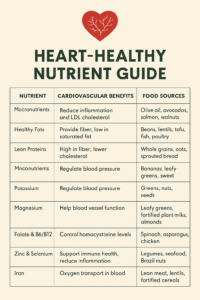
| Mineral | Function | Top Food Sources |
|---|---|---|
| Calcium | Bone & teeth health, muscle contraction | Dairy, tofu, leafy greens, sardines |
| Magnesium | Nerve function, muscle relaxation, heart rhythm | Nuts, legumes, dark chocolate |
| Potassium | Blood pressure, nerve signals | Bananas, potatoes, beans, yogurt |
| Sodium | Fluid balance, muscle & nerve function | Salt, processed foods |
| Phosphorus | Energy production, bone health | Meat, fish, dairy, beans |
| Iron | Oxygen transport (hemoglobin), energy | Red meat, lentils, spinach |
| Zinc | Immune support, wound healing | Oysters, beef, pumpkin seeds |
| Iodine | Thyroid hormone production | Iodized salt, seaweed, dairy |
| Selenium | Antioxidant defense, thyroid function | Brazil nuts, eggs, seafood |
| Fluoride | Teeth and enamel strength | Fluoridated water, tea, fish bones |
💡 Tip: A varied whole-food diet is the best way to ensure optimal mineral intake.
Who’s at Risk for Mineral Deficiencies?
Certain groups are more vulnerable to deficiencies due to diet, life stage, or medical conditions.
🔍 Common At-Risk Groups:
- Pregnant women (Iron, Iodine, Calcium, Zinc)
- Vegans/Vegetarians (Iron, Zinc, Calcium)
- Older adults (Calcium, Magnesium, Zinc)
- People with GI issues (Iron, Magnesium, Zinc)
- High sodium consumers (Potassium, Calcium loss)
❗ Common Deficiency Symptoms:
| Deficiency | Signs |
|---|---|
| Iron | Fatigue, pale skin, shortness of breath |
| Magnesium | Muscle cramps, anxiety, irregular heartbeat |
| Zinc | Frequent infections, poor wound healing |
| Iodine | Goiter, weight gain, fatigue |
| Calcium | Brittle nails, bone loss, muscle twitching |
Should You Take Mineral Supplements?
Food should be your first source of minerals—but there are valid reasons to supplement:
- Diagnosed deficiency (e.g., iron, zinc, magnesium)
- Increased needs (e.g., pregnancy, athletic training)
- Medical conditions or surgeries affecting absorption
- Low intake due to diet restrictions
✔️ Choosing a Quality Supplement:
- Look for chelated forms (e.g., magnesium glycinate, iron bisglycinate) for better absorption
- Avoid mega-doses unless prescribed
- Check for third-party testing (USP, NSF)
- Take minerals at the right time (e.g., iron on an empty stomach, magnesium at night)
🛑 Caution: Some minerals can be toxic in high doses (especially iron, selenium, and zinc). Don’t self-diagnose—get tested.
Mineral Interactions: Why Balance Matters
Too much of one mineral can interfere with the absorption of another:
- Excess calcium can impair iron and magnesium absorption
- High zinc intake can inhibit copper
- Iron competes with calcium when taken together
🧠 Tip: If taking multiple mineral supplements, space them throughout the day.
✅ Practical Ways to Get More Minerals
- Eat the rainbow—colorful fruits and vegetables are rich in micronutrients
- Include seeds, nuts, beans, and leafy greens daily
- Use iodized salt (unless advised otherwise)
- Drink fluoridated water (if available)
- Swap processed snacks for mineral-rich whole foods
Conclusion: The Micronutrient Giants
Though required in small amounts, minerals are indispensable to your health. They form your bones, fire your nerves, power your muscles, and shield your cells. Whether you’re managing a chronic condition, eating plant-based, or just aiming for better health, a mineral-smart diet is essential.
When in doubt, test your levels—and support your body with what it truly needs, one mineral at a time.
📚 References (APA Style)
Balch, P. A. (2023). Prescription for nutritional healing: The A-to-Z guide to supplements (6th ed.). Penguin Random House.
Berdanier, C. D., & Berdanier, L. A. (2021). Advanced nutrition: Macronutrients, micronutrients, and metabolism (3rd ed.). CRC Press.
Ross, A. C., Caballero, B., Cousins, R. J., Tucker, K. L., & Ziegler, T. R. (Eds.). (2014). Modern nutrition in health and disease (11th ed.). Lippincott Williams & Wilkins.
Zhao, G. (Ed.). (2017). Mineral containing proteins: Roles in nutrition. Springer.