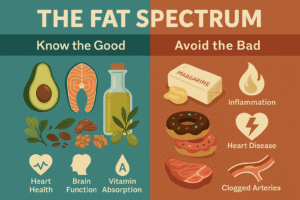
Introduction: Tiny Nutrients with a Massive Impact
Vitamins may be required in small amounts, but their influence on your body is anything but minor. These essential micronutrients are involved in hundreds of biological processes—from energy production and immune support to blood clotting, vision, and neurological function.
Since the body either doesn’t produce vitamins at all or doesn’t make them in sufficient amounts, we must get them from our diet—or supplements when necessary. Yet despite their importance, vitamin deficiencies remain common across all age groups, especially in people with restrictive diets, absorption disorders, or increased nutritional needs.
What Are Vitamins?
Vitamins are organic compounds that the body needs in tiny amounts to function properly. They are typically classified into two major groups:
1. Fat-Soluble Vitamins
Stored in the liver and fatty tissues; absorbed with dietary fat.
- Vitamin A
- Vitamin D
- Vitamin E
- Vitamin K
💡 Tip: Because they’re stored, excessive intake (especially via supplements) can lead to toxicity.
2. Water-Soluble Vitamins
Not stored in large amounts; excess is excreted in urine. These must be replenished more regularly.
- Vitamin C
- B-complex vitamins: B1 (thiamine), B2 (riboflavin), B3 (niacin), B5, B6, B7 (biotin), B9 (folate), B12 (cobalamin)
Key Functions of Each Vitamin
Here’s a breakdown of what each vitamin does and where to get it:
| Vitamin | Function | Best Food Sources |
|---|---|---|
| A | Vision, skin, immune function | Carrots, sweet potatoes, spinach, liver |
| D | Calcium absorption, bone health, immunity | Sunlight, fortified milk, salmon, eggs |
| E | Antioxidant, skin health, immune support | Almonds, sunflower seeds, spinach |
| K | Blood clotting, bone health | Kale, broccoli, brussels sprouts |
| B1 (Thiamine) | Energy metabolism, nerve function | Whole grains, pork, legumes |
| B2 (Riboflavin) | Energy production, cell function | Milk, eggs, green vegetables |
| B3 (Niacin) | DNA repair, metabolism | Chicken, tuna, peanuts |
| B5 (Pantothenic Acid) | Hormone & cholesterol synthesis | Mushrooms, avocado, yogurt |
| B6 (Pyridoxine) | Brain development, red blood cell production | Bananas, potatoes, poultry |
| B7 (Biotin) | Hair, skin, and nail health | Eggs, nuts, seeds |
| B9 (Folate) | DNA synthesis, pregnancy support | Leafy greens, legumes, fortified grains |
| B12 | Red blood cell formation, nerve protection | Meat, dairy, fortified cereals (vegans need supplements) |
| C | Collagen formation, immunity, antioxidant | Citrus fruits, strawberries, bell peppers |
Common Vitamin Deficiencies (and Who’s at Risk)
Some vitamins are more commonly deficient, particularly among vegans, older adults, pregnant individuals, and those with absorption issues (e.g., celiac, Crohn’s disease):
🔍 High-Risk Deficiencies:
- Vitamin D – due to low sun exposure or dietary intake
- Vitamin B12 – especially in vegans/vegetarians
- Folate – critical in pregnancy; deficiency increases risk of neural tube defects
- Vitamin C – rare in developed countries but can occur with poor diets
- Vitamin A – common in low-income countries, especially in children
🧪 Note: Deficiencies can be identified via lab tests or signs such as fatigue, poor wound healing, irritability, or hair loss.
Should You Take Vitamin Supplements?
Whole foods are the best source of vitamins. However, supplementation can be useful or necessary when:
- You follow a restricted diet (e.g., vegan, keto, low-calorie)
- You have higher needs (e.g., pregnancy, elderly, chronic illness)
- You have absorption issues (e.g., after gastric bypass, IBD)
- You’re correcting a known deficiency
🔍 What to Look for in a Supplement:
- Third-party tested (e.g., USP, NSF)
- Dosage close to the Recommended Dietary Allowance (RDA)
- Avoid mega-doses unless medically prescribed
- Choose food-based or methylated forms for better absorption (e.g., methylfolate vs. folic acid)
🛑 Reminder: More is not always better. Excess vitamin A or E can be toxic in high doses.
How Much Do You Need?
The RDA varies by age, gender, life stage, and health status. Here’s a general idea for adults:
| Vitamin | Adult RDA |
|---|---|
| A | 700–900 mcg RAE |
| D | 600–800 IU (15–20 mcg) |
| E | 15 mg |
| K | 90–120 mcg |
| C | 75–90 mg |
| B12 | 2.4 mcg |
| Folate (B9) | 400 mcg |
| B6 | 1.3–1.7 mg |
📋 For exact personal needs, consult a registered dietitian or healthcare provider.
Practical Tips for Getting Enough Vitamins
- Eat a rainbow of fruits and vegetables every day
- Include whole grains, nuts, seeds, and legumes
- Choose fortified foods if you’re vegetarian or vegan
- Spend 10–15 minutes in sunlight daily for vitamin D (or supplement if needed)
- Focus on variety, not perfection
Conclusion: The Power of Vitamins
Vitamins might be small in quantity, but they are mighty in their impact. They support everything from your immune system to your nervous system, and from your bones to your skin. Whether you’re preparing meals for your family, managing a health condition, or fine-tuning your diet, a vitamin-rich diet is foundational to vibrant health.
If you’re unsure whether you’re getting enough of the essential vitamins, speak with a qualified healthcare provider or dietitian. Your long-term health could depend on it.
References (APA Style)
Combs, G. F., & McClung, J. P. (2022). The vitamins: Fundamental aspects in nutrition and health (6th ed.). Academic Press.
Ross, A. C., Caballero, B., Cousins, R. J., Tucker, K. L., & Ziegler, T. R. (Eds.). (2014). Modern nutrition in health and disease (11th ed.). Lippincott Williams & Wilkins.
Balch, P. A. (2023). Prescription for nutritional healing: The A-to-Z guide to supplements (6th ed.). Penguin Random House.
Munoz, N., & Bernstein, M. (2019). Nutrition assessment: Clinical and research applications. Jones & Bartlett Learning.