Introduction: The Roots of Cardiovascular Disease
Atherosclerosis—the gradual buildup of plaque in arteries—doesn’t happen overnight. It’s the product of years of elevated cholesterol, inflammation, high blood sugar, and oxidative stress. Thankfully, the same lifestyle choices that prevent heart attacks and strokes can also keep your arteries clear and elastic for life.
This article outlines how to prevent atherosclerosis through targeted nutrition and daily habits—long before the first signs of arterial damage appear.
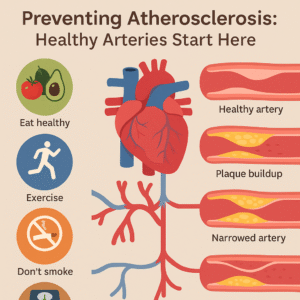
What Is Atherosclerosis?
Atherosclerosis is the narrowing and hardening of arteries due to plaque buildup, which includes cholesterol, calcium, and inflammatory cells. This restricts blood flow and increases the risk of:
- Coronary artery disease (heart attack)
- Stroke (if affecting carotid arteries)
- Peripheral artery disease (PAD)
Plaque development is driven by:
- Elevated LDL cholesterol and triglycerides
- Chronic inflammation and high blood sugar
- Oxidized LDL from smoking and poor diet
- Endothelial dysfunction
Diet Strategies to Prevent Plaque Buildup
| Strategy | Why It Helps |
|---|---|
| Emphasize anti-inflammatory foods | Reduce vessel irritation and immune overactivity |
| Use healthy fats | Monounsaturated and omega-3 fats protect vessel walls |
| Avoid added sugars and refined grains | Improve blood sugar control and reduce oxidation |
| Limit red and processed meats | Reduce inflammatory compounds and saturated fats |
| Eat colorful produce | Antioxidants reduce oxidative stress and protect endothelium |
Prevention-Optimized Dietary Patterns
🫒 Mediterranean Diet
- High in olive oil, fish, legumes, vegetables
- Reduces inflammation and plaque formation
🌿 Anti-Inflammatory Diet
- Includes berries, leafy greens, turmeric, nuts
- Excludes refined carbs, processed oils, sugary snacks
🧬 Plant-Forward Portfolio Diet
- Includes plant sterols, soy, fiber, and nuts to reduce LDL
Key Nutrients for Arterial Health
| Nutrient | Target Intake | Why It Matters | Sources |
| Omega-3s | 1,000–2,000 mg EPA/DHA | Anti-inflammatory, improves plaque stability | Salmon, flaxseed, walnuts |
| Soluble fiber | 10–25 g | Lowers LDL, improves gut health and insulin sensitivity | Oats, apples, lentils, psyllium |
| Polyphenols | No set target | Antioxidant, improves endothelial function | Berries, cocoa, green tea, olive oil |
| Magnesium | 300–500 mg | Supports nitric oxide and reduces BP | Seeds, dark greens, legumes, whole grains |
| Vitamin K2 | No RDA; 90–200 mcg common | Regulates calcium placement, may prevent arterial stiffening | Natto, fermented dairy, leafy greens |
Sample Day: Artery-Friendly Eating Plan
| Meal | Foods Included |
| Breakfast | Oats with chia, berries, flax, and almond milk |
| Snack | Apple with a tablespoon of almond butter |
| Lunch | Quinoa salad with chickpeas, olive oil, lemon, kale, and red peppers |
| Snack | Green tea and a handful of walnuts |
| Dinner | Grilled salmon, roasted Brussels sprouts, sweet potato |
Lifestyle Habits to Prevent Arterial Damage
| Habit | Why It Works |
| Exercise regularly | Improves circulation, supports nitric oxide, lowers LDL |
| Avoid smoking | Prevents oxidative damage to LDL and arterial lining |
| Manage blood sugar | Reduces endothelial injury and inflammation |
| Sleep 7–8 hours/night | Poor sleep raises BP and inflammatory markers |
| Minimize chronic stress | Chronic stress promotes vascular constriction |
Conclusion: Prevention Starts in the Arteries
Preventing atherosclerosis begins long before symptoms show up. By embracing a plant-forward, anti-inflammatory diet, managing blood sugar, and protecting your vessel lining with consistent lifestyle habits, you reduce your risk of plaque, clots, and cardiovascular events.
👉 Return to the Prevention Overview →
👉 Next: Preventing Stroke and Brain Vascular Disease →
References (APA Style)
- Ross, A. C., et al. (2014). Modern Nutrition in Health and Disease (11th ed.). Lippincott Williams & Wilkins.
- Berdanier, C. D., & Berdanier, L. (2021). Advanced Nutrition: Macronutrients, Micronutrients, and Metabolism (3rd ed.). CRC Press.
- Libby, P. (2021). The changing landscape of atherosclerosis. Nature, 592(7855), 524–533.
- Estruch, R., et al. (2013). Primary prevention of cardiovascular disease with a Mediterranean diet. NEJM, 368(14), 1279–1290.
- Jenkins, D. J., et al. (2003). Effects of a dietary portfolio of cholesterol-lowering foods. JAMA, 290(4), 502–510.