Introduction: Why Early Action Matters
High blood pressure doesn’t just raise your risk of heart disease—it’s often the first sign that your vascular system is under stress. Known as the “silent killer,” hypertension develops gradually and often without symptoms, yet it’s one of the most modifiable cardiovascular risk factors.
This article focuses on proactive, evidence-based strategies to keep blood pressure in the healthy range and prevent progression to clinical hypertension.
What Is Considered Healthy Blood Pressure?
Blood pressure is expressed as two numbers:
- Systolic pressure (top number): the pressure when the heart beats
- Diastolic pressure (bottom number): the pressure when the heart relaxes between beats
Standard Blood Pressure Categories (Adults)
| Category | Systolic / Diastolic (mmHg) |
|---|---|
| Optimal | < 120 / < 80 |
| Elevated | 120–129 / < 80 |
| Hypertension Stage 1 | 130–139 / 80–89 |
| Hypertension Stage 2 | ≥140 / ≥90 |
Blood pressure is generally considered normal when it is below 120/80 mmHg. However, ideal levels may vary slightly based on age, comorbidities, and overall cardiovascular risk.
Sex Differences in Blood Pressure
- Premenopausal women tend to have lower blood pressure than men of the same age, likely due to the protective vascular effects of estrogen.
- After menopause, women’s blood pressure often rises and may surpass that of men, increasing their risk for hypertension-related heart disease.
- Treatment guidelines are similar for men and women, but awareness and monitoring may be especially important during midlife and postmenopausal years in women.
Goal: Maintain BP < 120/80 mmHg through diet, lifestyle, and consistent monitoring.
Key Dietary Strategies for Prevention
Adopting these dietary practices early in life can help prevent the onset of high blood pressure and support vascular health over time:
| Strategy | Why It Works |
|---|---|
| Reduce sodium intake | Excess sodium increases fluid retention and blood volume, raising pressure. Lowering sodium (<2,300 mg/day, ideally 1,500 mg) helps reduce vascular resistance and fluid overload. |
| Increase potassium-rich foods | Potassium counters sodium’s effect and supports vasodilation by encouraging sodium excretion. Foods like spinach, beans, and bananas are excellent sources. |
| Focus on whole foods | Whole foods are naturally low in sodium and high in fiber, potassium, and magnesium—nutrients vital for blood pressure regulation. |
| Limit ultra-processed foods | These often contain hidden sodium, sugars, and trans fats that drive inflammation and raise blood pressure. Favor fresh or minimally processed options instead. |
Prevention-Friendly Dietary Frameworks
🧂 DASH Diet
- Developed specifically to reduce blood pressure
- High in fruits, vegetables, low-fat dairy, and whole grains
🫒 Mediterranean Diet
- Naturally low in sodium, high in potassium and fiber
- Includes olive oil, legumes, greens, and omega-3-rich fish
🌿 Whole-Food Plant-Based (WFPB)
- Excludes processed and animal products
- May produce weight loss and BP reduction
Key Nutrients for BP Regulation
| Nutrient | Recommended Intake | Why It Helps | Sources |
| Potassium | 3,500–4,700 mg/day | Promotes sodium excretion, vessel relaxation | Beans, bananas, spinach, potatoes |
| Magnesium | 300–500 mg/day | Supports endothelial and muscular function | Seeds, legumes, dark chocolate |
| Calcium | 1,000–1,200 mg/day | Aids in vascular contraction/dilation | Low-fat dairy, tofu, kale |
| Fiber | 25–30 g/day | Improves vascular health and gut microbiota | Oats, legumes, berries |
| Sodium | <2,300 mg/day (ideal: <1,500 mg) | Reduces fluid retention and pressure | Avoid processed foods |
Sample Prevention-Friendly Meal Day
| Meal | Foods Included |
| Breakfast | Oatmeal with blueberries, ground flax, and almond milk |
| Snack | Banana with a handful of unsalted sunflower seeds |
| Lunch | Quinoa salad with chickpeas, arugula, bell peppers, olive oil |
| Snack | Apple with almond butter |
| Dinner | Baked trout, roasted sweet potato, sautéed spinach |
Lifestyle Habits That Protect Blood Pressure
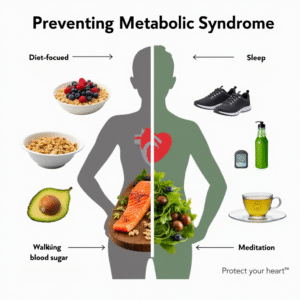
Lowering your risk of high blood pressure isn’t just about your diet—it’s also about the small, powerful choices you make every day. Here’s how to turn everyday actions into long-term heart protection:
| Habit | How It Helps & Why It’s Powerful |
|---|---|
| Exercise regularly | Just 30 minutes of walking, biking, or dancing most days boosts circulation, strengthens your heart, and lowers blood pressure. Think of movement as your natural medication—with zero side effects. |
| Sleep 7–8 hours per night | Sleep is your body’s reset button. Deep, restorative rest helps regulate hormones, reduces inflammation, and keeps your BP in check. Protect your sleep like your life depends on it—because it does. |
| Limit alcohol | Excess alcohol raises blood pressure and weakens your vessels. Cutting back—even just a few days per week—makes a measurable difference. Toast your progress with a heart-healthy mocktail! |
| Reduce stress | Chronic stress drives up cortisol and tightens blood vessels. Practicing mindfulness, breathing exercises, or journaling can restore calm—and drop your BP along with it. |
| Quit smoking | The moment you quit, your arteries begin to heal. It’s never too late to become smoke-free—and your heart will thank you every day you do. |
✨ Remember: it’s not about perfection—it’s about progress. Small habits, repeated consistently, have the power to change your heart’s future.
Conclusion: The Power of Prevention
High blood pressure is one of the most preventable—and treatable—conditions in modern medicine. With a nutrient-dense, low-sodium diet and heart-smart lifestyle choices, you can protect your arteries, reduce long-term cardiovascular risk, and stay in control.
👉 Return to the Cardiovascular Prevention Overview →
References (APA Style)
- Whelton, P. K., et al. (2018). 2017 ACC/AHA guideline for the prevention, detection, evaluation, and management of high blood pressure in adults. JACC, 71(19), e127–e248.
- Ross, A. C., et al. (2014). Modern Nutrition in Health and Disease (11th ed.). Lippincott Williams & Wilkins.
- Berdanier, C. D., & Berdanier, L. (2021). Advanced Nutrition: Macronutrients, Micronutrients, and Metabolism (3rd ed.). CRC Press.
- Appel, L. J., et al. (1997). A clinical trial of the effects of dietary patterns on blood pressure. NEJM, 336(16), 1117–1124.