Introduction: Back to the Basics—or Backward in Time?
The Paleo and ancestral diets propose a bold idea: that modern chronic diseases stem from a mismatch between our biology and the highly processed, grain- and sugar-laden diets of industrial civilization. By replicating the dietary patterns of Paleolithic humans, proponents believe we can achieve better metabolic health, reduced inflammation, and greater vitality.
Though often grouped together, these diets differ in nuance and interpretation. This article explores the science behind these evolutionary eating models, comparing their structures, benefits, risks, and real-world applicability.
What Are Paleo and Ancestral Diets?
🥩 Paleo Diet (Paleolithic Diet)
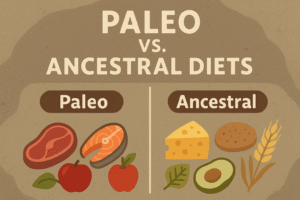
The Paleo diet, sometimes called the “caveman diet,” aims to emulate the presumed diet of pre-agricultural humans from the Paleolithic era (~2.5 million to 10,000 years ago). It focuses on whole, nutrient-dense foods that could have been hunted, gathered, or foraged.
Core Foods Allowed:
- Lean meats (especially grass-fed/wild game)
- Fish and seafood
- Eggs
- Vegetables
- Fruits
- Nuts and seeds
- Healthy fats (e.g., olive oil, avocado, coconut)
Foods Typically Excluded:
- Grains (wheat, rice, oats)
- Legumes (beans, lentils, peanuts)
- Dairy (especially processed varieties)
- Refined sugar and artificial sweeteners
- Processed foods and oils (e.g., canola, soybean)
- Alcohol
The premise is that genetic evolution has not kept pace with modern agriculture and food processing, contributing to the rise of obesity, type 2 diabetes, cardiovascular disease, and autoimmune disorders.
🌾 Ancestral Diets: A Broader Evolutionary Framework
The ancestral diet is less rigid and more regionally and culturally adaptive, drawing from the anthropological diversity of human diets before industrialization.
Key Features:
- Includes fermented dairy, depending on ancestral lineage (e.g., kefir, yogurt in East African or Northern European diets)
- Emphasizes organ meats, bone broth, and traditional food preparation (e.g., soaking grains or sprouting legumes)
- Allows certain pseudograins or heirloom crops (e.g., millet, quinoa)
- Encourages intermittent fasting or seasonal eating patterns
- May incorporate wild foraged plants, insects, or traditional herbal practices
Ancestral nutrition is often linked with functional medicine and nutrigenomics, focusing on epigenetic compatibility and gut microbiome health.
Paleo vs. Ancestral: A Comparison Table
| Feature | Paleo Diet | Ancestral Diet |
|---|---|---|
| Approach | Mimic Paleolithic human diet | Reconstruct traditional lifeways |
| Dairy | Excluded | Included selectively (e.g., fermented) |
| Grains/Legumes | Excluded | May include properly prepared |
| Organ Meats | Optional | Emphasized |
| Scientific Focus | Evolutionary biology, metabolic health | Anthropology, gut and epigenetic health |
| Cultural Flexibility | Low | High |
Scientific Rationale: What the Research Suggests
✅ Insulin Sensitivity and Blood Sugar Control
Several trials demonstrate improved glycemic control and insulin sensitivity on Paleo diets compared to Western diets:
- A 2009 study in Cardiovascular Diabetology found that subjects following a Paleo diet for 12 weeks had significantly improved glucose tolerance and lower HbA1c levels compared to those on a Mediterranean diet.
- Ancestral patterns with lower glycemic load and higher protein intake have been shown to promote lean mass retention and fat loss, especially in insulin-resistant individuals
✅ Anti-inflammatory and Lipid Benefits
- Reducing seed oils, trans fats, and refined sugars may lower inflammatory cytokines like TNF-α and IL-6.
- Omega-3-rich animal foods and antioxidant-dense plants in both diets are associated with:
- Reduced C-reactive protein (CRP)
- Improved HDL/LDL cholesterol ratios
- Lower triglyceride levels
✅ Gut Health and Microbiome
- Excluding grains and legumes may benefit individuals with SIBO, IBS, or autoimmune issues, though this remains controversial.
- Emphasizing prebiotic fiber from root vegetables and fermented foods enhances short-chain fatty acid (SCFA) production, gut integrity, and microbial diversity
Nutritional Strengths
- High in vitamins A, E, C, D, K2, B12, and hemo-iron from meats and vegetables
- Natural sources of collagen, gelatin, and glycine (especially in ancestral approaches using bone broths)
- Low glycemic impact, high satiety index
- Focus on nutrient density over calorie counting
Limitations and Considerations
| Concern | Paleo Diet | Ancestral Diet |
|---|---|---|
| Calcium intake | Often low without dairy | Offset by bone broths, leafy greens |
| Fiber variety | Limited without legumes/grains | Greater plant variety encouraged |
| Sustainability | Meat-heavy diets raise concerns | Better if locally, sustainably sourced |
| Scientific consensus | Emerging, not conclusive | Based on anthropology, not RCTs |
📌 A balanced, long-term Paleo or ancestral plan may require:
- Careful attention to calcium, iodine, and magnesium
- Selective inclusion of low-lactose dairy or fortified foods
- Personalized guidance for those with thyroid, kidney, or lipid conditions
Modern Applications and Hybrid Approaches
Many people adopt modified Paleo or ancestral-inspired eating:
- Paleo + fermented dairy = “Primal” diet (e.g., Mark Sisson’s approach)
- Paleo + legumes/grains = “Pegan” (Dr. Mark Hyman’s plant-forward adaptation)
- Paleo autoimmune protocol (AIP) = an elimination diet tailored to autoimmune conditions
These frameworks are often combined with:
- Functional medicine protocols
- Intermittent fasting
- Circadian rhythm or seasonal eating patterns
Sample Day: Paleo vs. Ancestral Plate
| Meal | Paleo | Ancestral |
|---|---|---|
| Breakfast | Scrambled eggs with spinach and avocado | Kefir smoothie with berries and soaked chia |
| Lunch | Grilled chicken with sweet potato and kale | Lamb stew with root veggies, herbs, and bone broth |
| Dinner | Wild salmon, broccoli, and coconut cauliflower rice | Liver pâté, fermented cabbage, millet flatbread |
| Snack | Apple with almond butter | Yogurt with honey and walnuts |

Conclusion: Evolutionary Nutrition with Modern Wisdom
Paleo and ancestral diets offer compelling, evolution-informed frameworks for improving health by returning to whole, unprocessed, and nutrient-dense foods. While Paleo tends toward strict avoidance of post-agricultural staples, ancestral nutrition embraces regional variation, fermentation, and cultural knowledge to achieve balance.
For those seeking metabolic reset, autoimmune relief, or simply cleaner, more conscious eating, both models offer valuable tools—when adapted mindfully and supported by current evidence.
References (APA Style)
- Berdanier, C. D., & Berdanier, L. (2021). Advanced Nutrition: Macronutrients, Micronutrients, and Metabolism (3rd ed.). CRC Press.
- Ross, A. C., et al. (2014). Modern Nutrition in Health and Disease (11th ed.). Lippincott Williams & Wilkins.
- Ostojic, S. M. (2023). Molecular Nutrition and Mitochondria. Elsevier.
- Frayn, K. N. (2010). Metabolic Regulation: A Human Perspective (3rd ed.). Wiley-Blackwell.
- Lindeberg, S. et al. (2009). Cardiovascular Diabetology, 8(35).
- Eaton, S. B., et al. (1988). Paleolithic nutrition: a consideration of its nature and current implications. New England Journal of Medicine, 319(5), 283–289.